Pharo benefits from an elegant design that enables a relatively simple implementation of many advanced programming techniques.
Here are some of them:
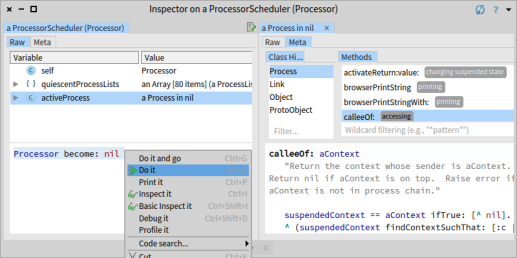
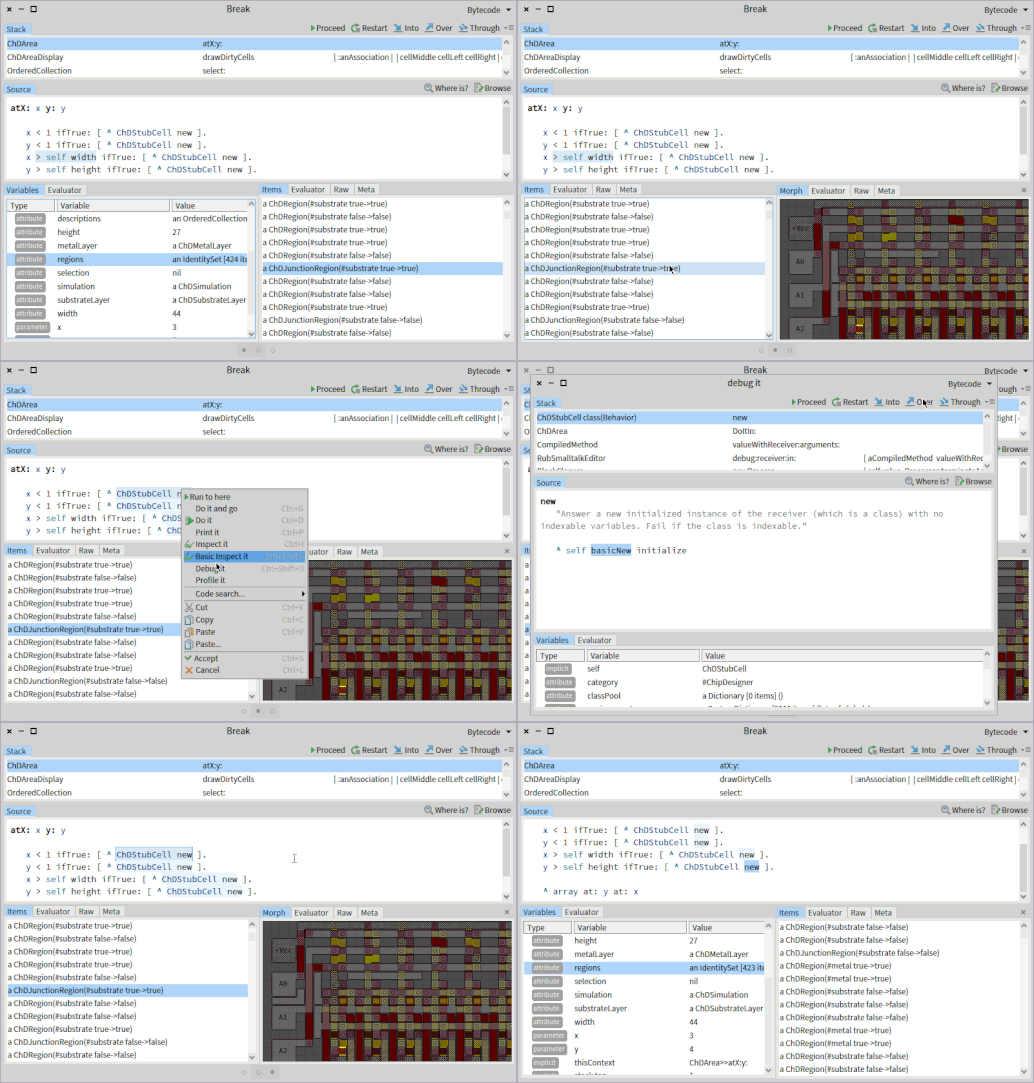
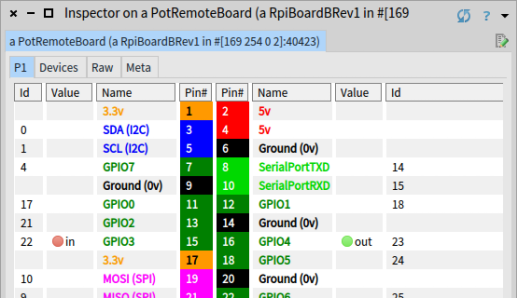
- In Pharo, the border between your program and IDE can be eliminated. That means that you may directly use your code for a visual representation of your data structures during debugging, and easily modify the built-in tools to fit your needs, etc.
- Pharo exposes everything to the programmer. Every object in the system can be examined and changed with respect to the object encapsulation rules.
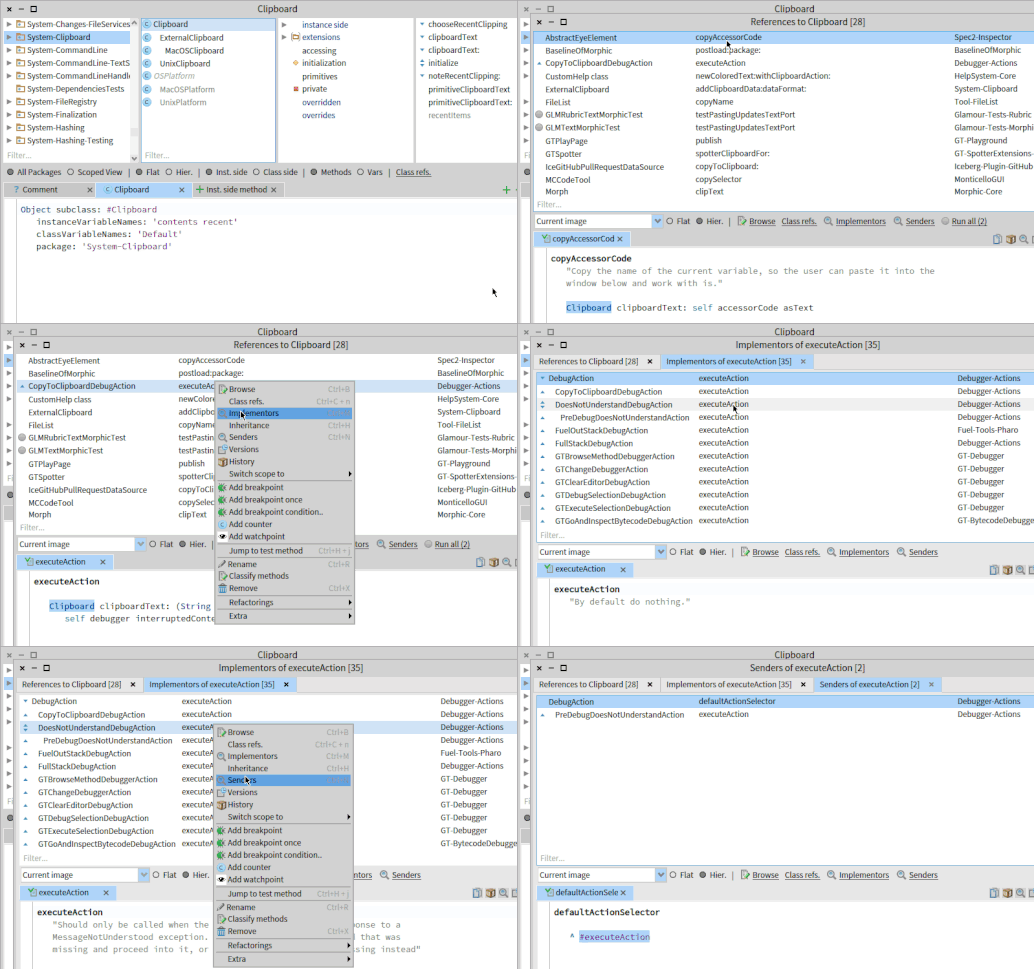
- Pharo can enumerate all objects that have reference to some object.
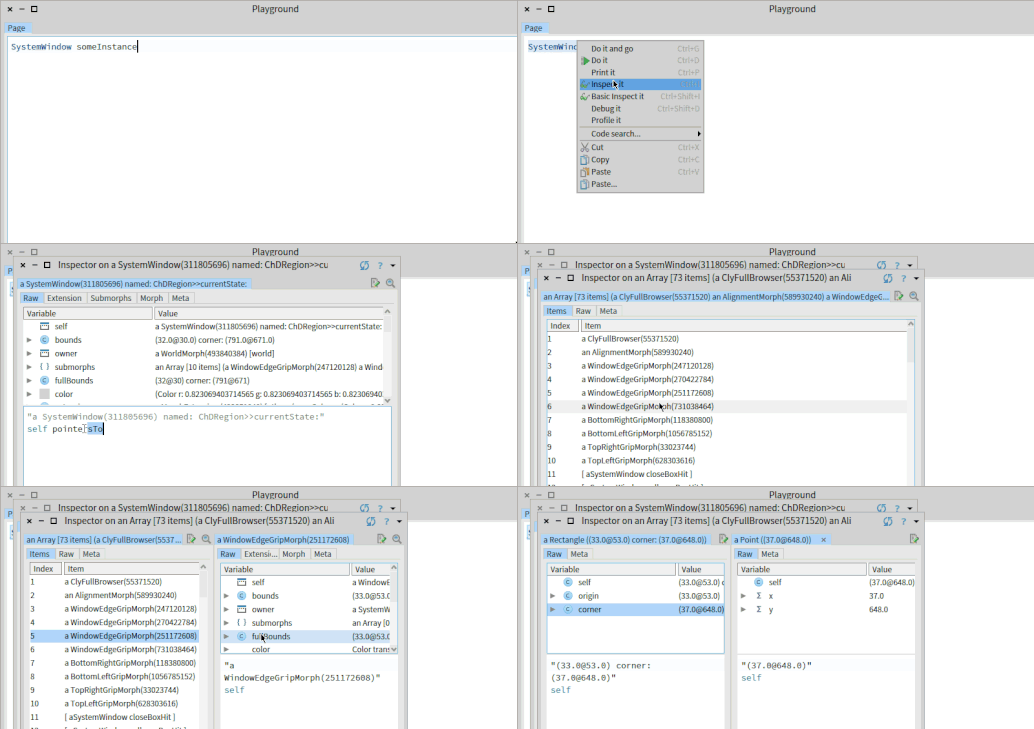
- In Pharo, everything is an object. This purity and uniformity in the system and language design makes Pharo clean and comfortable to learn.
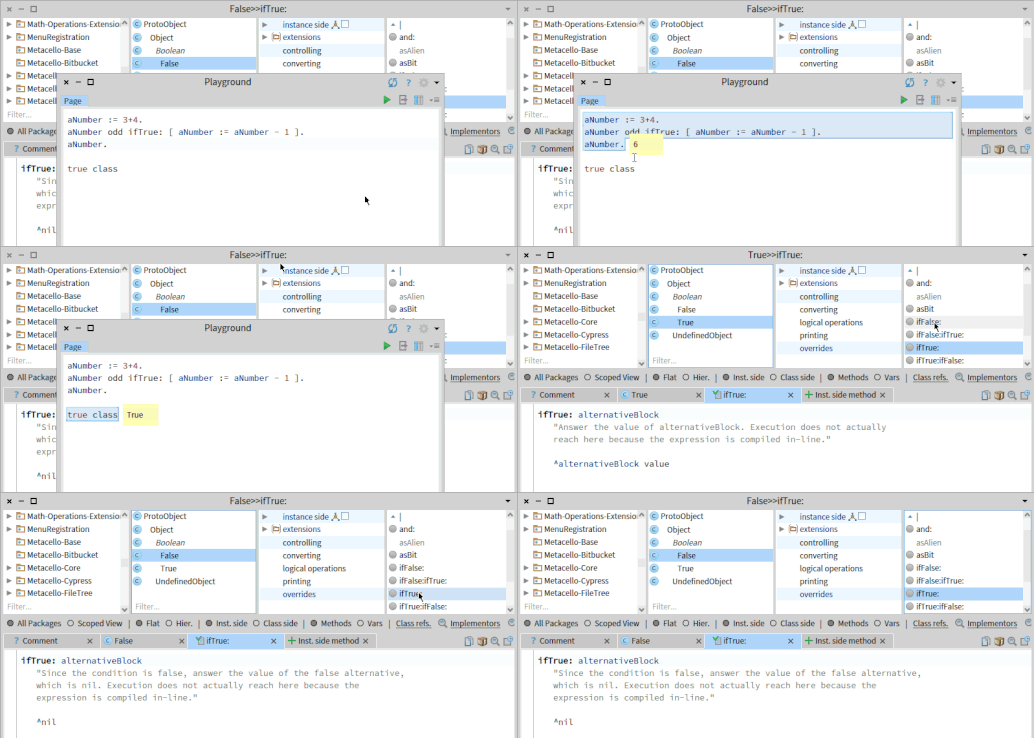
- Pharo uses files for serialization of source code, but, by default, it does not use files to edit them. Instead of a text editor, it provides the tools to browse and modify the classes, methods, class comments and other program entities. So Pharo has a much better understanding of relations between them and allows easier navigation and refactorings.
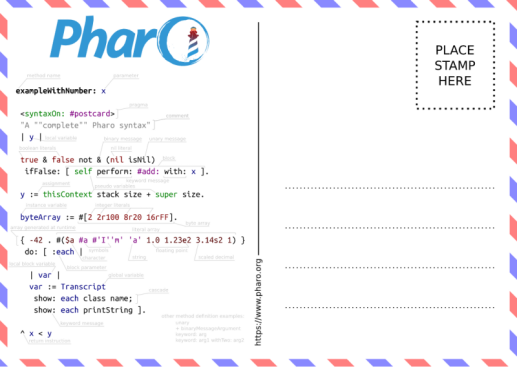
- The language syntax has only six reserved words
- Since the grammar is LL(1), it is very fast to parse
- Easy to learn
- Pharo is designed for message passing without argument ambiguity
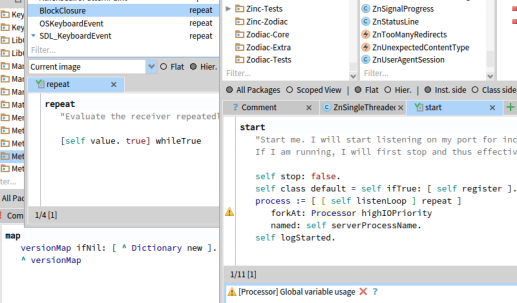
- The closures in Pharo with non-local returns allow elegant implementation of control structures without needing to define them in the language itself. Pharo is a simple meta-language where the programmer has all features required for the writing of custom readable domain-specific languages.
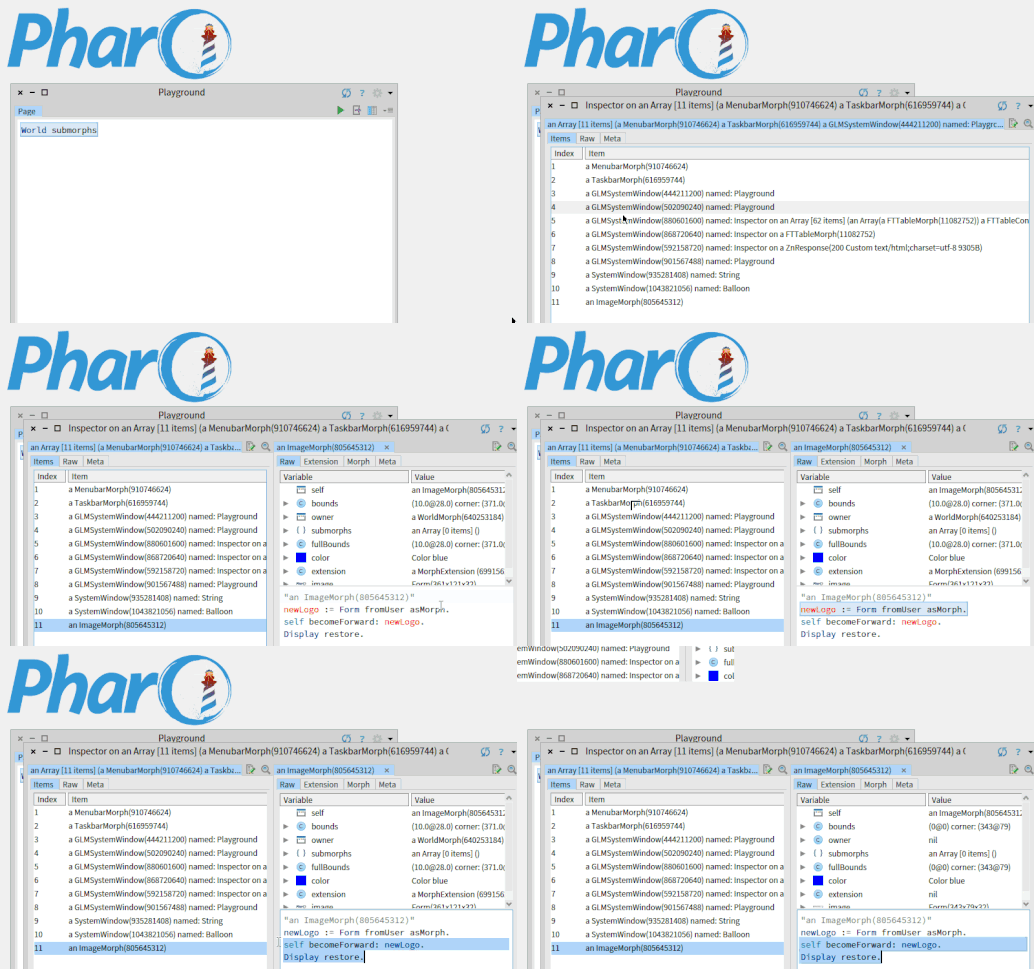
- In Pharo, you can easily replace an object with another one. All references to the old object in your running program will be replaced by references to the new object.
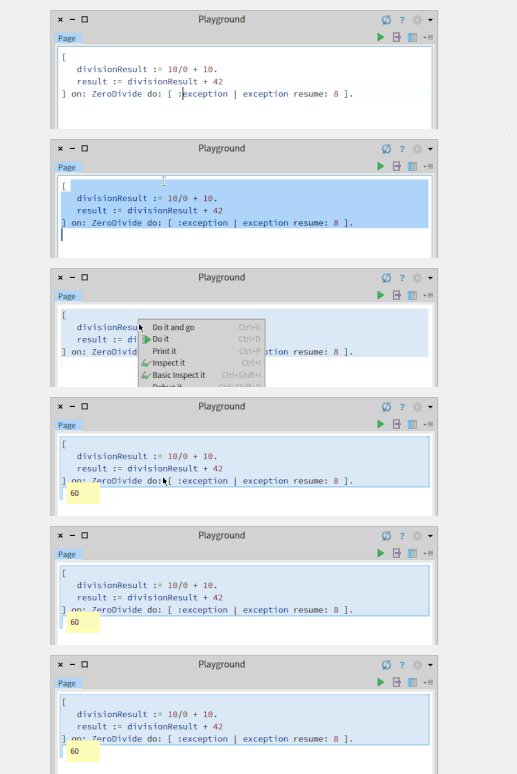
- Pharo provides advanced exceptions system that can do things like resuming from a raised exception with providing an alternative result so your program can recover from failures.
- Their fast speed allows them to be used for clean information-flow mechanisms.
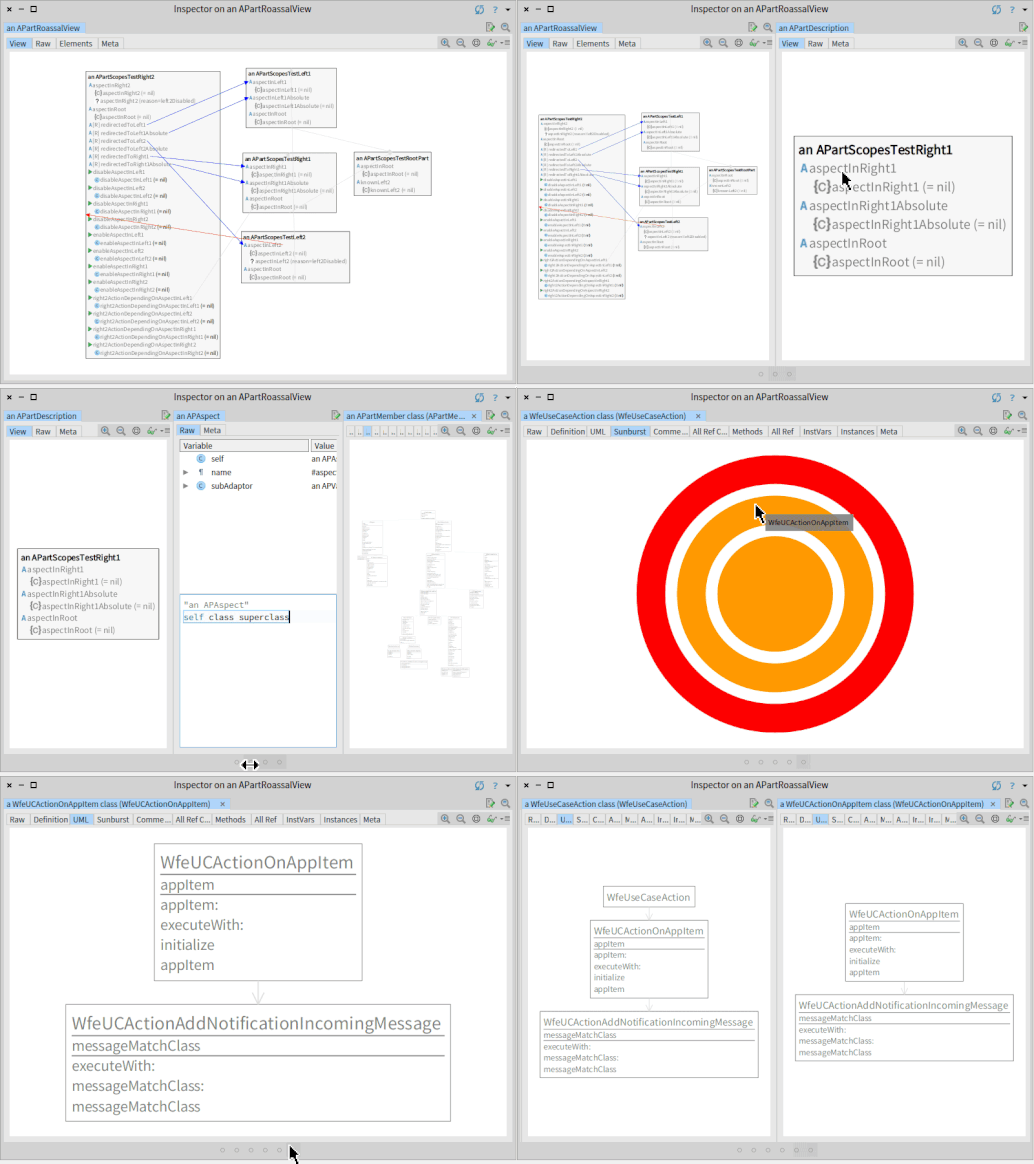
- You can visualize your objects in many ways (textual form, graphical representation) and use it to inspect the state of your running program. Debuggers can use these visualizations to help you to your understanding.
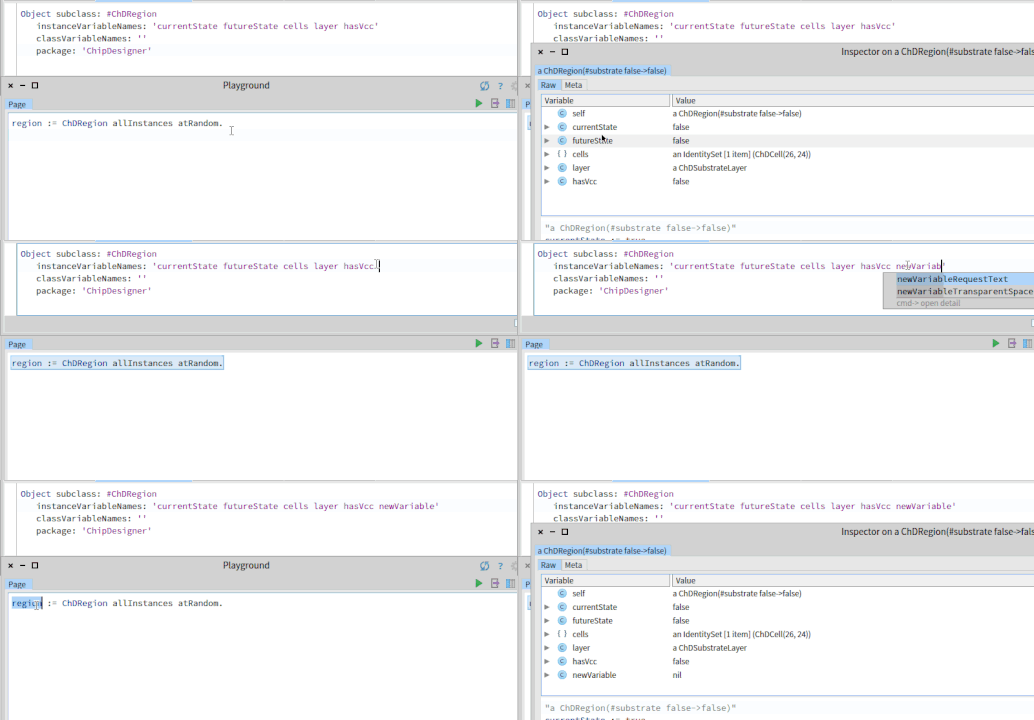
- Pharo can evolve while it’s running. It is like an organism. You can do things like add or remove instance variables of classes that have already existing instances. All these living instances will be properly modified.
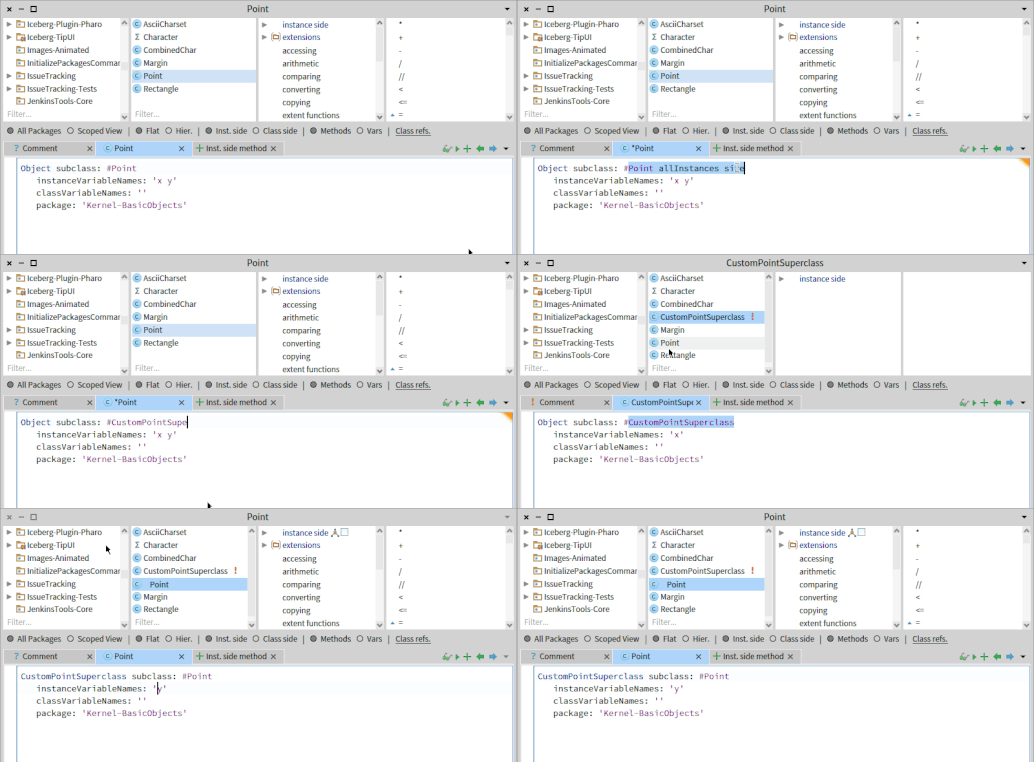
- You can change the definition of existing classes including changing its superclass. To some selected object, you can simply assign a different class and do similar operations. These capabilities are essential for the ability of the system to evolve without the need for restarts.
- Pharo uses a very fast virtual machine with many unique features that runs on Windows, macOS and Linux including the ARM processors
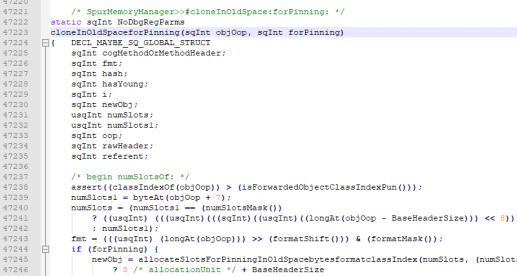
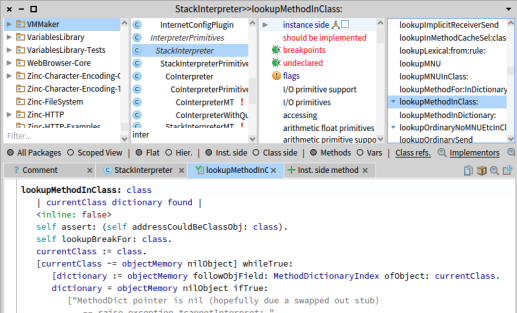
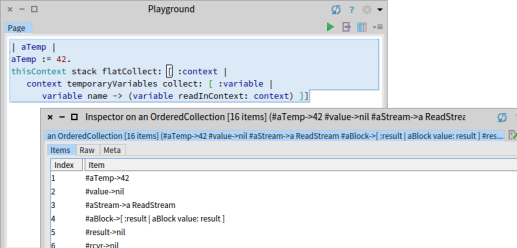
- You can easily inspect, modify or serialize the call stack. This allows, among other things, much easier building of debugging tools.
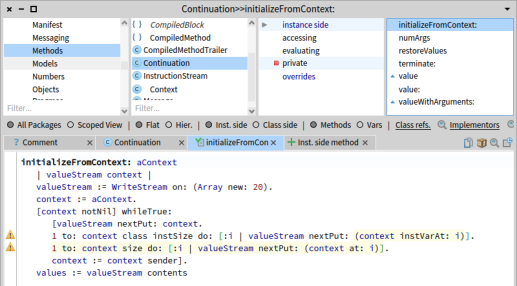
- Call stack manipulation allows surprisingly easy implementation of continuations without the need for direct support of the virtual machine. The continuations are very handy for web development tasks and backtracking implementation.
- With the Pharo reflection, you can easily enumerate all existing instances of a particular class and investigate references to them. It is beneficial for detecting memory leaks. It is an essential Pharo reflectivity feature.
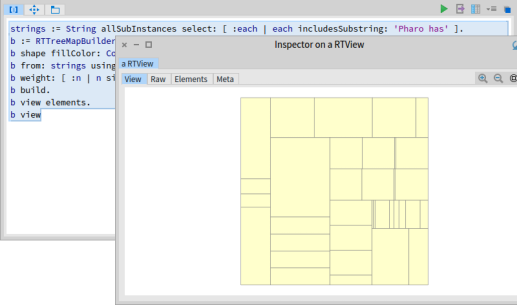
- Methods are objects and objects can serve as methods. In this case, the invoking of a method means that the object receives a special message. It may be used for example during the coverage testing. You replace all class methods with such proxy objects, and when called, these objects replace themselves with the original method and write this information to a log.
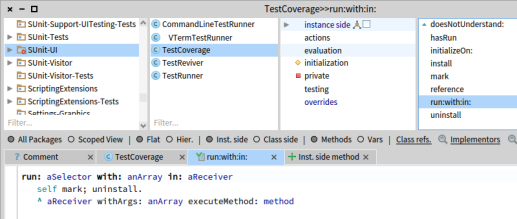
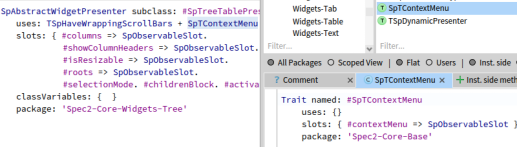
- Pharo classes use single inheritance, but they can use stateful traits for sharing of behavior with other classes.
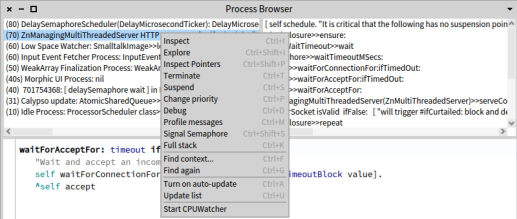
- Pharo includes own process management that allows using concurrent programming even on platforms that do not support it.
- Abstract syntax tree of methods can be extended by metalinks that enable doing additional operations before, after or instead of particular AST nodes. That allows the clean first-class implementation of features like breakpoints, coverage testing, variables that remember old values, etc.
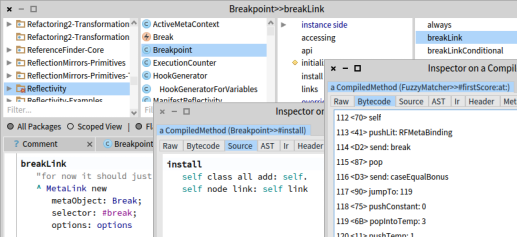
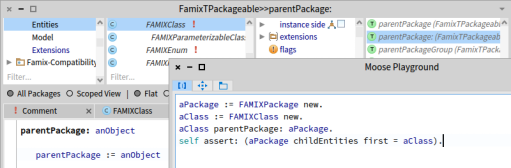
- Instance variables described by objects, too. This makes it easy to implement, for example, much smarter instance variables like variables that keep bidirectional managed references between two objects. A simple assignment then automatically updates the other side of the reference, too.

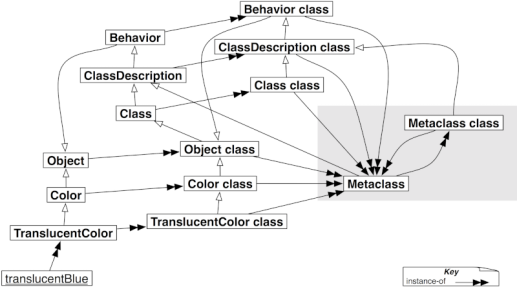
- Objects have classes and classes have classes, too, the metaclasses. These metaclasses have a class, too, and Pharo allows using custom ones. It allows having the implementation of language features like traits as standalone libraries without any direct support in the virtual machine.
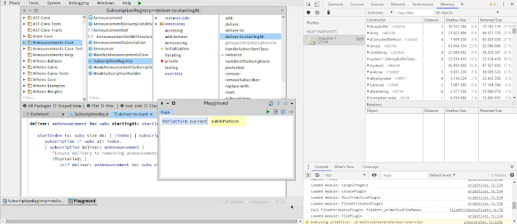
- The compiler is written in Pharo, and you can modify it as anything else in the system. You can use completely different compilers for some of your classes.
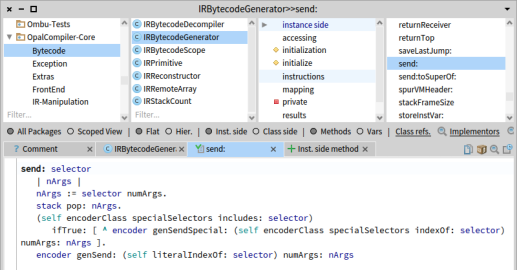
- To be more productive, blacksmiths create custom tools for their tasks. Pharo shares the same philosophy. It allows you to create naturally dedicated tools for better understanding of your problems, supporting you in faster development
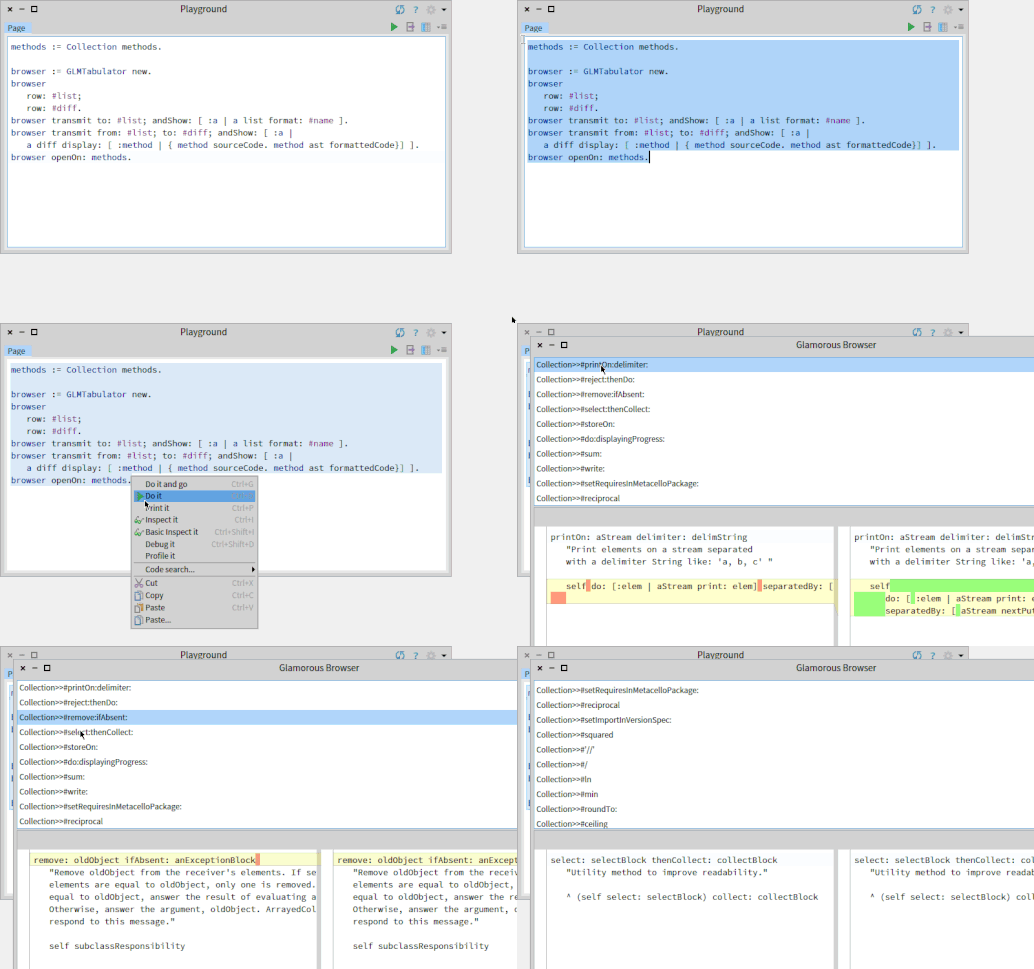
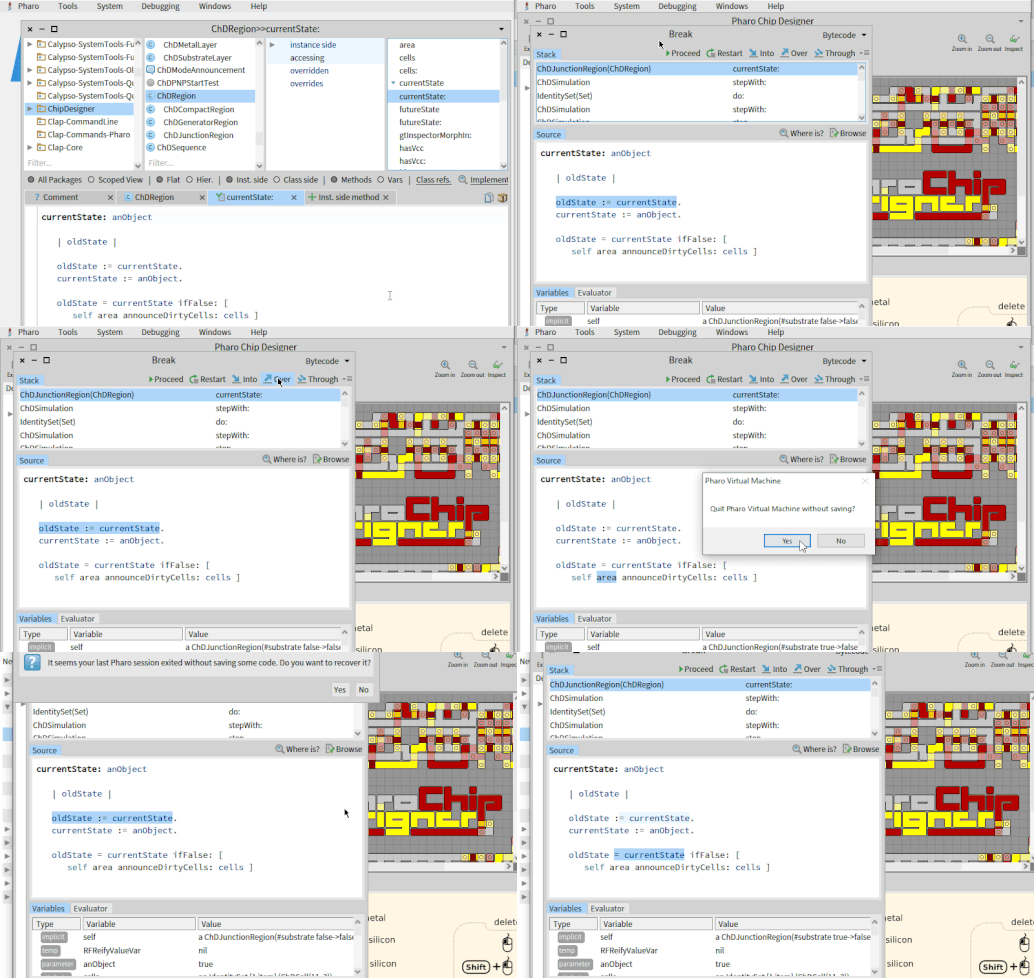
- All objects in the system can be stored at once in a platform-independent file named image. So you can, for example, save complete state of your program during debugging and restore it to try to find a different execution path or alternative solution.
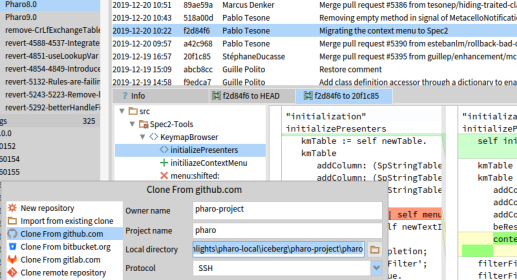
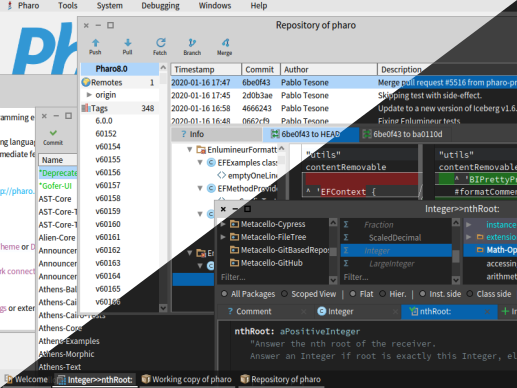
- Pharo has advanced integrated Git support that goes beyond the standard level of files. You can merge your branches on the granularity of particular methods, browse their history, create pull-requests directly from the IDE, and so on.
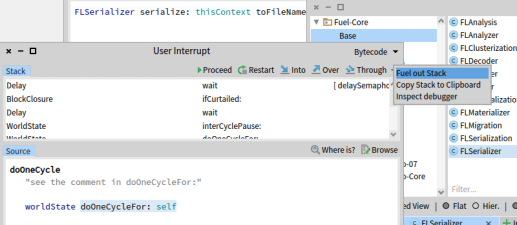
- All objects, including classes or running contexts, can be serialized to a file. You can, for example, store the state of a debugger with the content of current stack and attach it to the issue report.
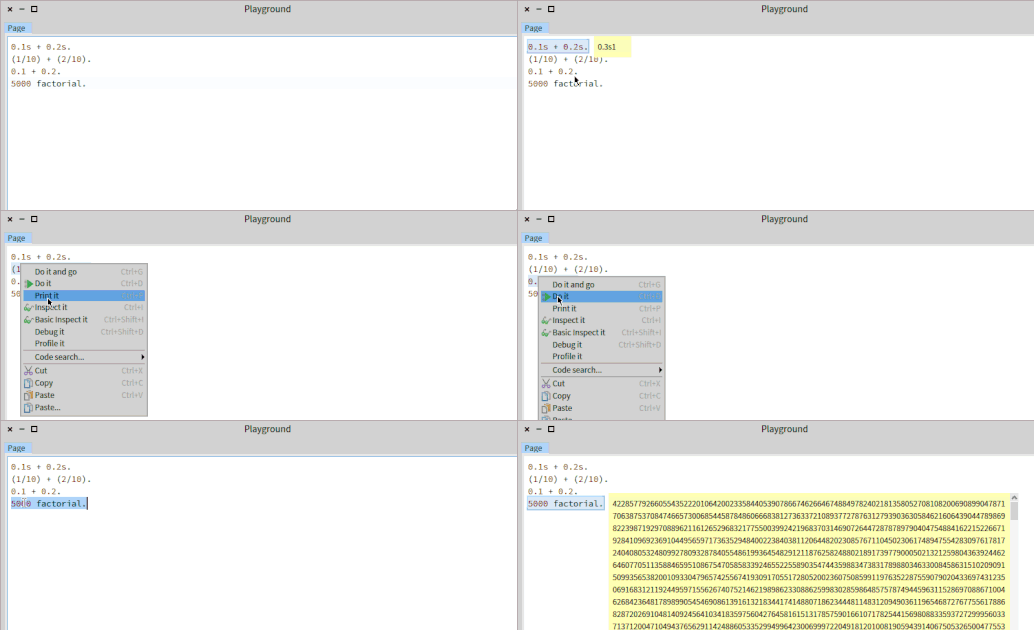
- Pharo can use fractions, scaled decimals, large integers and so on to work with numbers without loss of arithmetic precision.
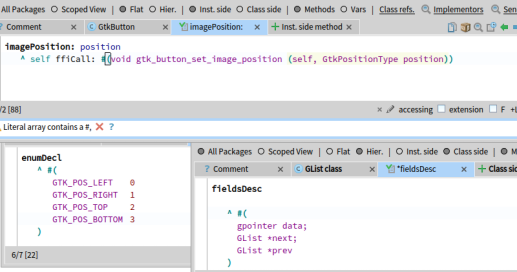
- Pharo includes an FFI interface that makes the creation of bindings to C libraries very straightforward.
- Ability to easily create proxy objects - objects that process and/or resend all messages to another object, is essential to object-oriented languages.
- In Pharo, the programmers have almost absolute freedom to customize the system and use many potentially dangerous features. On the other hand, most programmers will use them with deliberation, because Pharo, by default, provides a powerful standard library and tools that shape how to use the system the right way. Instead of making the language strict, it guides the programmers to do things right.